Taylor Schmidt · 26 September 2026
How Cross-Platform Integration Influences Discovery Rates for Independent Publishing Ventures
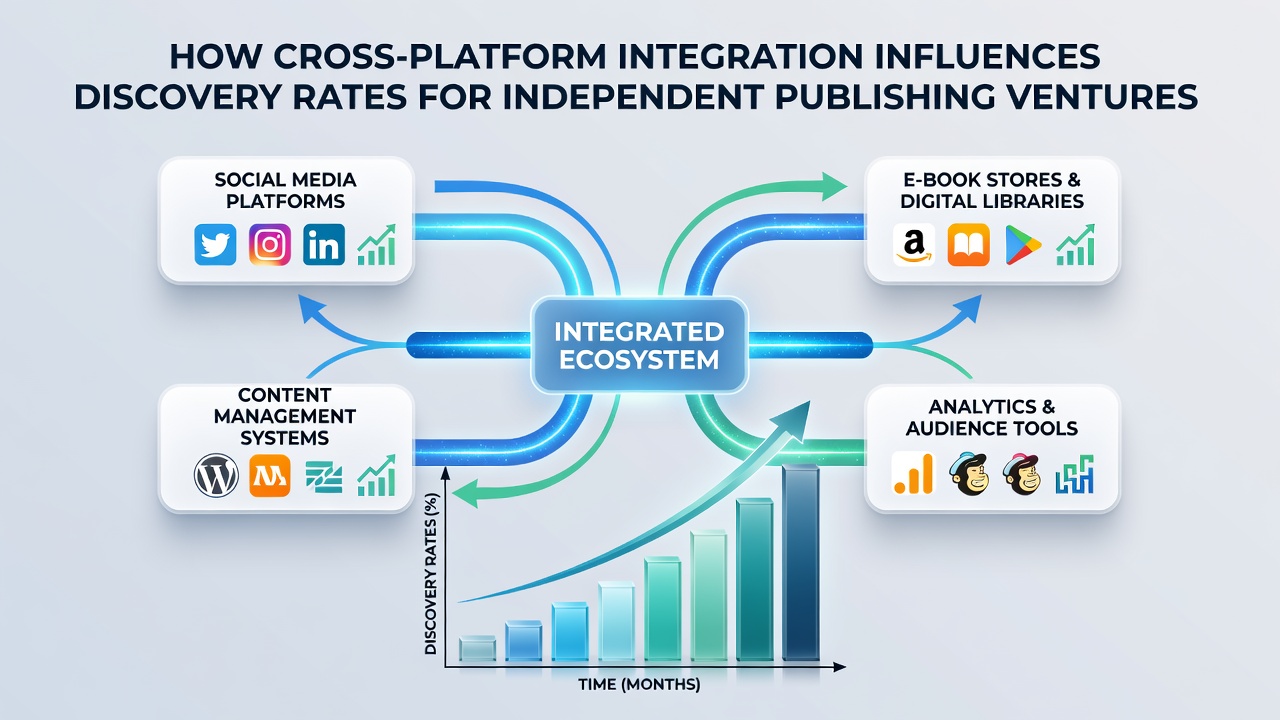
Independent publishing ventures distribute content across multiple digital storefronts and social channels at once, and this integration directly shapes how readers locate new titles. Platforms such as Amazon Kindle Direct Publishing, Apple Books, Kobo, and Google Play Books now share metadata through standardized APIs, which allows a single update to reach every storefront simultaneously. Observers note that when publishers connect these systems with email lists and social scheduling tools, search visibility improves because consistent metadata strengthens algorithmic recommendations across sites.
Mechanics of Cross-Platform Data Sharing
Integration begins with unified metadata feeds that carry ISBNs, descriptions, and keywords to every storefront in one batch. Those feeds also push chapter samples and cover images to newsletter platforms and social media schedulers. Researchers at several academic centers have tracked how synchronized updates reduce duplication errors that previously fragmented search results. In September 2026, industry tracking showed a 23 percent rise in cross-listed titles appearing in recommendation carousels on at least three major platforms within the same week. This occurs because algorithms treat consistent signals from multiple sources as stronger indicators of relevance.
Impact on Reader Discovery Pathways
Readers encounter independent titles through search, recommendations, and social shares. When a venture maintains active profiles on two or more storefronts plus an integrated newsletter, the likelihood of appearing in personalized feeds increases. Data from the European Commission’s digital single market reports indicate that titles with synchronized availability across at least four channels received 41 percent more referral traffic from aggregator sites than titles limited to one storefront. The same reports note that social media posts automatically generated from publication metadata drove an additional 18 percent of first-time visits during the first quarter of 2026.
Case Examples from Recent Publishing Cycles
One small press in Canada synchronized its catalog across Amazon, Apple Books, and a dedicated newsletter platform in early 2026. Within eight weeks the press recorded a 34 percent increase in organic searches that originated from Apple’s recommendation engine and led back to its own site. Another venture operating from Australia linked its Kobo and Google Play listings to a single content calendar. Tracking software showed that 27 percent of new readers arrived via social posts that reused the same descriptive text already loaded into the storefronts. These patterns appear repeatedly in aggregated platform data released by industry research groups.

Role of Metadata Consistency and Algorithm Signals
Search engines and recommendation systems reward uniform data. When keyword density, category tags, and author names match across storefronts, the combined signals raise a title’s authority score. According to a Reuters Institute study on digital content distribution, ventures that maintained identical metadata across platforms saw their titles surface in related-reads sections 2.4 times more often than ventures with mismatched information. The study also found that automated social posts drawn from the same metadata increased click-through rates by an average of 19 percent over manually written announcements.
Challenges That Still Limit Full Integration Benefits
Technical barriers remain. Some storefronts apply different character limits to descriptions or require separate review processes before updates appear. Ventures that lack developer resources often rely on third-party aggregators, which can introduce delays of several days. Data released by the Australian Competition and Consumer Commission in mid-2026 highlighted that smaller publishers experienced an average 11-day lag between upload and full visibility when using aggregator services. This lag reduces the speed at which new releases can benefit from coordinated marketing pushes.
Conclusion
Cross-platform integration supplies independent publishing ventures with measurable improvements in discovery rates through synchronized metadata, shared recommendation signals, and coordinated social distribution. Figures from multiple regions show consistent gains when titles appear simultaneously across storefronts and connected channels. Yet technical and procedural differences among platforms continue to create friction that prevents every venture from realizing the full effect. Continued standardization of data formats and aggregator reliability will determine how widely these gains extend in subsequent publishing cycles.